

Ashford Immigration
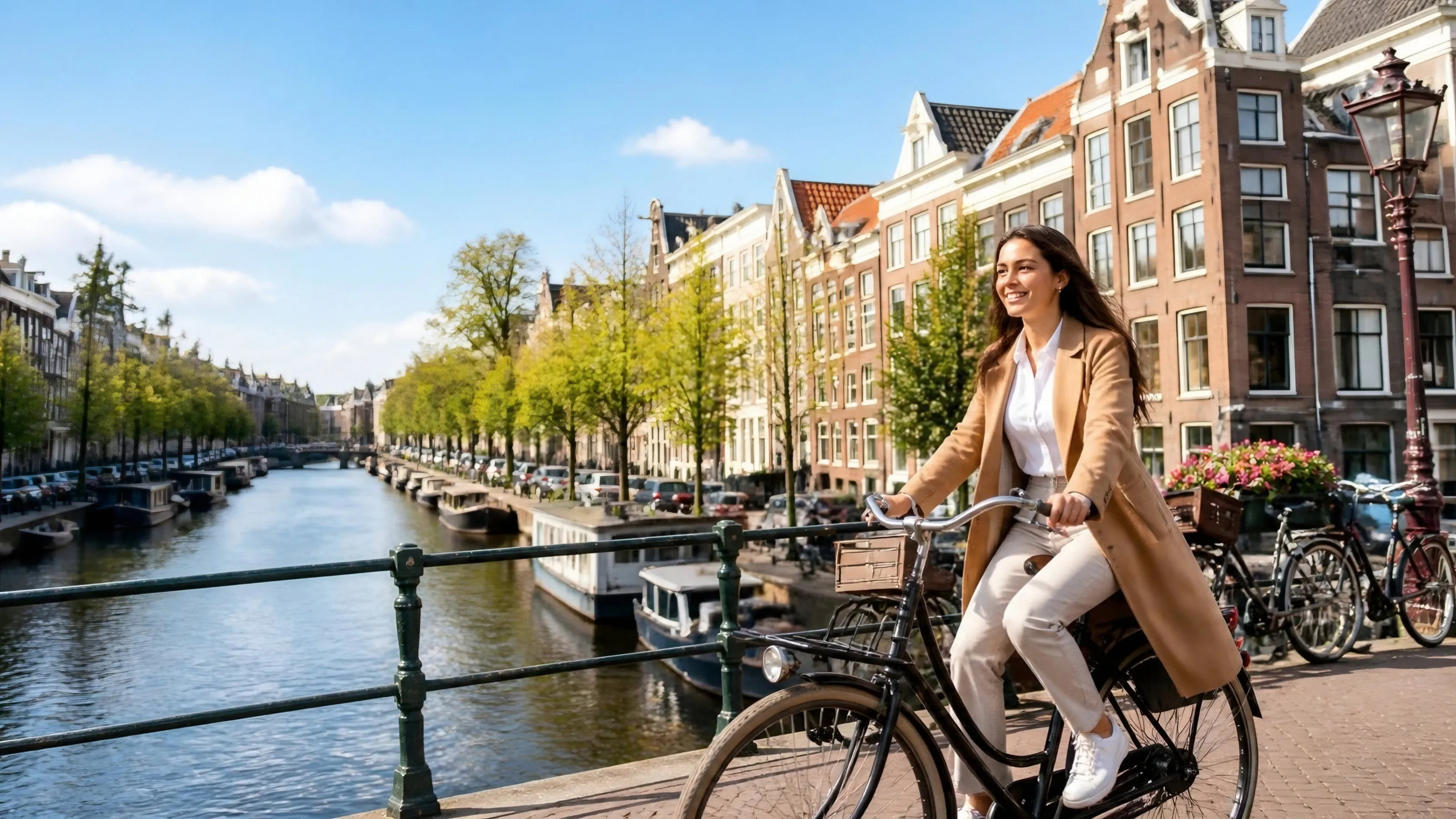
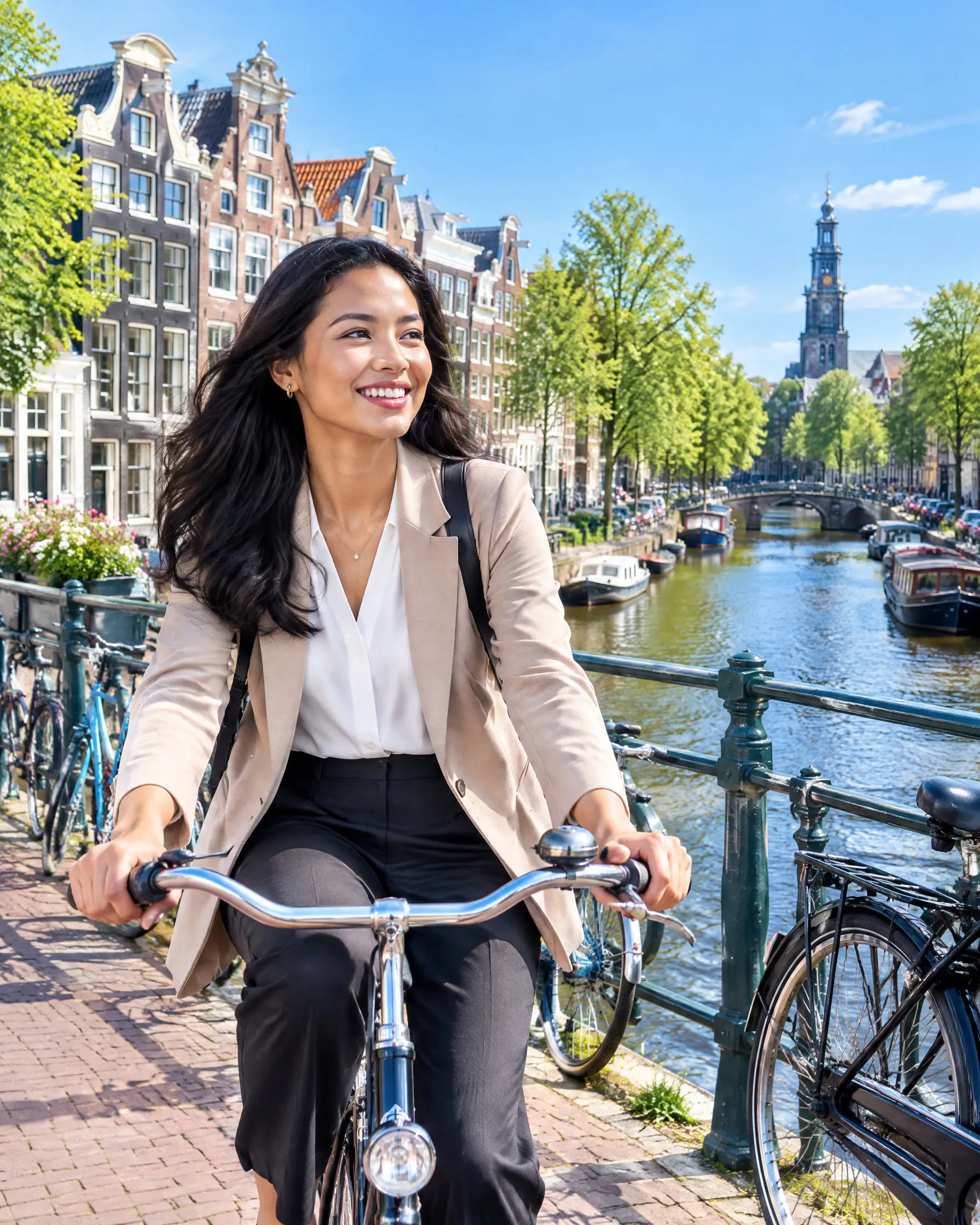
A woman cycling across a canal bridge in Amsterdam

NL · Europe

Immigrate to Netherlands

Most routes to the Netherlands start with a Dutch employer, university or family member who acts as your sponsor. This page sets out the main options and what each one usually depends on.
Capital
Amsterdam
Currency
Euro (EUR)
Languages
Dutch, Frisian (Friesland province)
Typical processing
2–8 weeks for most sponsor-led permits

Why Netherlands

Why immigrate to Netherlands?

Many professionals look at the Netherlands because of its international job market. A large number of multinational companies run their European or regional offices there, and English is widely used at work, particularly in technology, engineering, logistics, finance and research. Employers recognised by the Dutch immigration service can bring in skilled staff through an employer-led process, so a job offer is often the practical starting point.

Families also weigh daily life. Dutch working culture places real value on time outside work, and part-time and flexible arrangements are common. Children can attend publicly funded Dutch schools, and there is also a network of international schools, some of them partly government-funded. Basic health insurance is compulsory for residents. Housing is in short supply in the larger cities, so it is worth planning early.

Students consider Dutch universities for their English-taught programmes and for the orientation year, which gives recent graduates time to look for work. Over the longer term, people who hold a qualifying permit and pass the civic integration exam may apply for permanent residence and later for Dutch citizenship. The Netherlands generally expects new citizens to give up their previous nationality, so it helps to think about this before you plan a permanent move.

Visa categories

Available visa categories for Netherlands

  • 01Highly skilled migrant
  • 02EU Blue Card
  • 03Intra-corporate transferee (ICT)
  • 04Student residence permit
  • 05Self-employed residence permit
  • 06Orientation year residence permit

Pathways in detail

Highly skilled migrant

The highly skilled migrant scheme lets an employer recognised by the IND as a sponsor bring in qualified staff without first testing the local labour market. Only the recognised employer can submit the application. The permit is tied to that employer, and its length follows your contract up to a maximum period. This suits professionals with a firm job offer from a Dutch organisation that already holds sponsor status. It typically depends on the employer’s recognition, a salary that meets the applicable minimum and is in line with the market rate for the role, and a genuine employment contract.

NOTESalary criteria differ by age and for recent graduates, and are updated periodically.
EU Blue Card

The EU Blue Card is a residence permit for highly qualified employees that follows a common European framework. In the Netherlands, the employer does not need to be a recognised sponsor, although recognition can make the process smoother. This suits professionals with a degree who have a qualifying job offer and may want to move within the EU later in their career. It depends on a recognised higher education qualification or, in some cases, relevant professional experience at a comparable level, with separate experience rules for IT roles. You also need a contract of sufficient length and a salary that meets the Blue Card criterion.

NOTEThe salary criterion is reviewed periodically.

Intra-corporate transferee (ICT)

This permit allows a company group based outside the EU to transfer managers, specialists and trainee employees to a Dutch branch or group company. It applies when you already work for the group outside the EU. This suits employees of international groups who are moving within the same organisation for a set period. It depends on your role, a minimum period of prior employment with the group, the transfer being temporary and your employer acting as sponsor.

NOTEThe permit has a maximum duration that varies by role.

Single Permit (GVVA)

The Single Permit combines residence and work in one document for employment that does not fall under the highly skilled migrant or Blue Card schemes. The employer must first look for suitable candidates in the Netherlands and the rest of the EU, and the Employee Insurance Agency (UWV) advises the IND on the labour market position. This suits people whose job offer does not meet the criteria for the highly skilled routes. It typically depends on the employer’s recruitment efforts, a salary in line with the relevant collective labour agreement and the UWV’s advice.

NOTEWhether a suitable candidate is available in the EU is assessed case by case.

Get started

Immigrate to Netherlands — start with an assessment

Typical processing time: 2–8 weeks for most sponsor-led permits

Times vary by visa category and individual circumstances. Contact us for an estimate based on your profile.

Immigrate to Netherlands

A consultant reviews your details and contacts you within 24–48 hours.

Netherlands · Next step

Find out which Netherlands routes fit your profile

Start with an eligibility assessment, or book a consultation to talk it through with our team.